MPC Holds Benchmark Rate, Upgrades Kenya Growth to 5.0% from 4.9%
Macro View
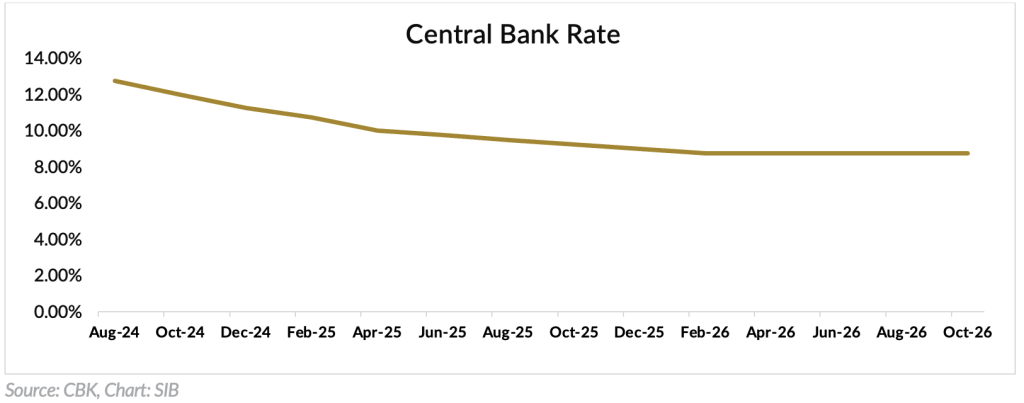
MPC maintains Base Rate at 8.75% in 3Q26; as committee upgrades economic growth target.
The Central Bank of Kenya (CBK) maintained the Central Bank Rate (CBR) at 8.75% at its 7 October 2026 MPC meeting, citing the need to keep inflation expectations anchored and support exchange-rate stability.
Externally, the MPC estimates the current account deficit at 3.2% of GDP in 2026, up from 2.1% in 2025, reflecting a wider trade deficit, higher mineral fuel imports and lower remittance inflows. Goods exports increased by 11.8%, while imports rose by 15.8%, largely due to higher food, fuel, intermediate and capital goods imports.
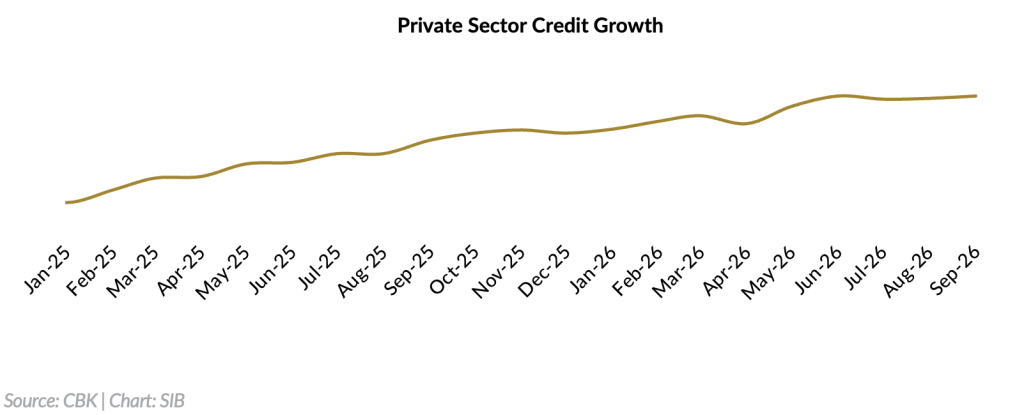
While credit conditions remain below historical levels, the recovery has strengthened, with private-sector credit growth rising to 10.6% in September 2026, from 10.3% in August and -2.9% in January 2025. The improvement reflects stronger credit demand alongside lower lending rates, with borrowing remaining robust across trade, building and construction, agriculture, finance and insurance, and consumer durables. At the same time, the banking sector remains stable and resilient, supported by strong liquidity and capital adequacy. Asset quality has also improved, with the gross NPL ratio declining to 13.9% in September, from 14.8% in June and 17.6% in August 2025.
Looking ahead, we expect the CBK to maintain a cautious and data-dependent monetary policy stance, with the CBR currently held at 8.75%. While inflation remains within the target range, rising core inflation and renewed global energy-price pressures warrant continued vigilance. The CBK is likely to balance the need to anchor inflation expectations and preserve exchange-rate stability with supporting the ongoing recovery in private-sector credit. The MPC will continue to monitor global oil prices, geopolitical developments and potential second-round effects on domestic inflation, with the next meeting scheduled for December 2026.
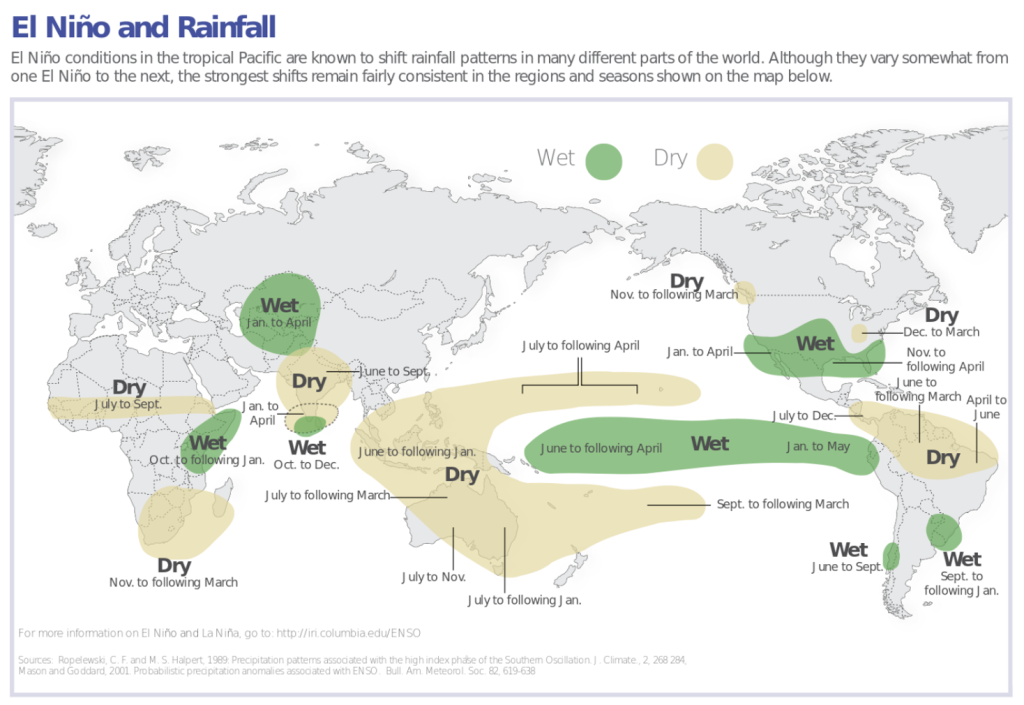
El Niño Risks Could Renew Food Inflation Pressures
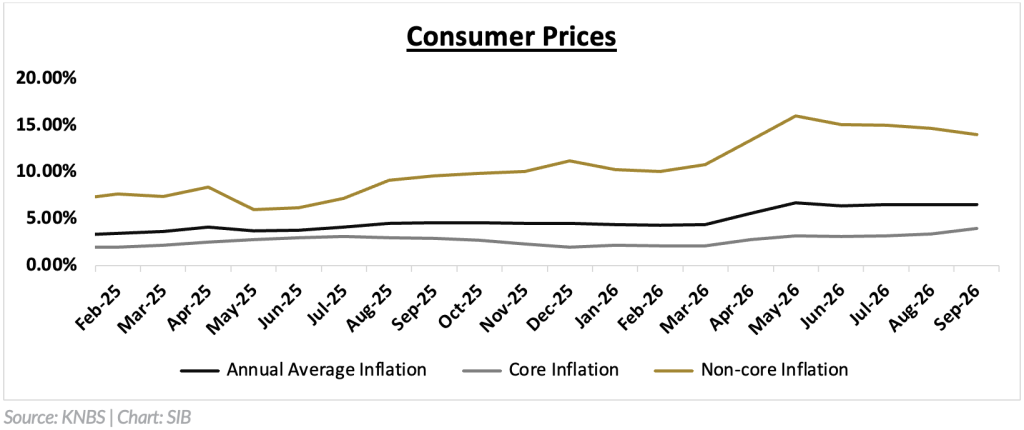
Kenya’s headline inflation accelerated from 6.6% in August to 6.8% in September, remaining within the Central Bank of Kenya’s 2.5–7.5% target range. The increase was primarily driven by a sharp rise in core inflation, which climbed from 3.4% to 4.0%, alongside higher food inflation, which rose from 9.0% to 9.5%.
Persistent supply-side pressures, particularly from the ongoing dry spell, pushed up the prices of milk, beef and fresh produce, with potatoes, kale, cabbages and tomatoes recording notable annual increases. Meanwhile, energy and transport costs remained elevated, with annual petrol and diesel prices rising by 15.8% and 26.9%, respectively, contributing to a 15.6% increase in the transport index.
Weather Risks Add to Inflation Uncertainty
Overall, weather-related risks are becoming an increasingly important factor in Kenya’s inflation outlook. Improved rainfall could support agricultural production and ease food-price pressures, but excessive rainfall and flooding could instead damage crops, disrupt transport networks and raise distribution costs. These risks come alongside elevated energy prices and ongoing global uncertainty, creating a challenging environment for monetary policy.
For the fixed-income market, a renewed food or energy shock would complicate the disinflation process and could limit the scope for further yield compression. While inflation remains within the CBK’s target range, higher food prices, weather-related supply disruptions and potential second-round effects remain key risks to monitor, particularly as the CBK balances the need to support economic growth against the risk of renewed inflationary pressures.
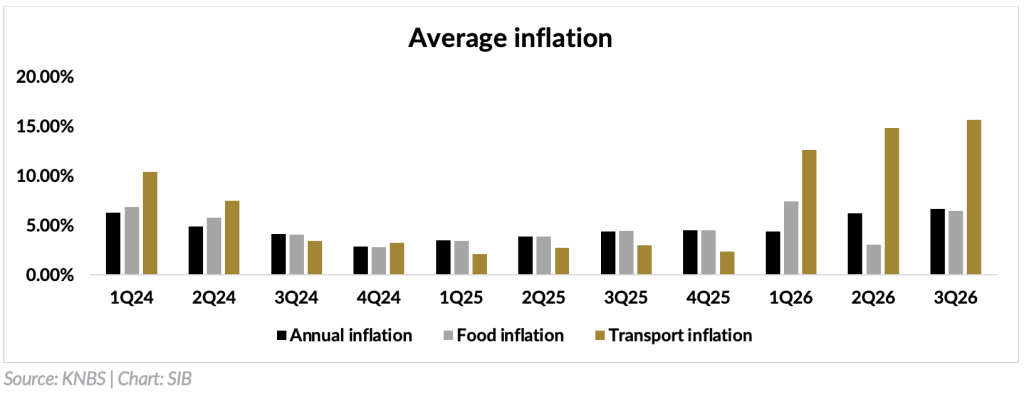
Despite a slight uptick in annual inflation rates in recent months, the metric remains below the mid-point of CBK’s target range of 5±2.5%.
Renewed Energy Pressures Keep Global Inflation Risks Elevated
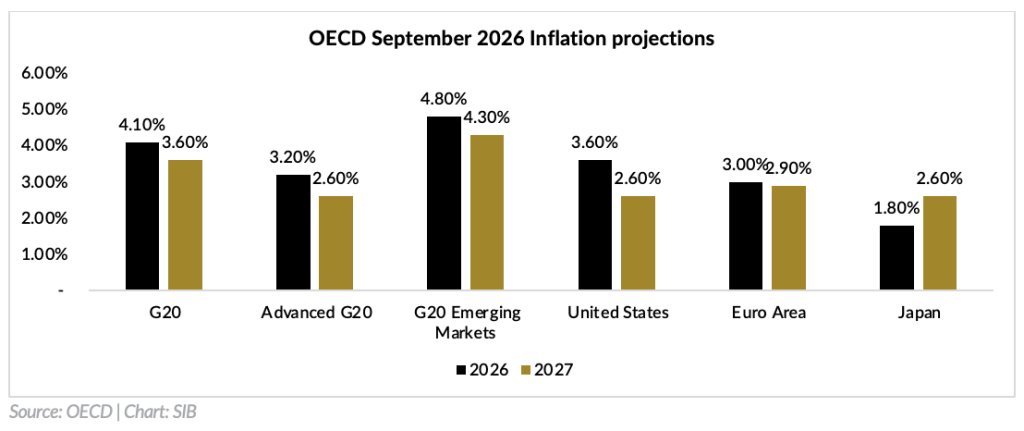
The global inflation outlook has become more challenging as renewed disruptions to energy production and exports in the Middle East have pushed oil and gas prices higher, reversing some of the moderation seen earlier in the year. The OECD estimates that headline inflation across the G20 is set to rise to 4.1% in 2026 from 3.4% in 2025, while more than half of G20 economies are currently recording inflation above their central banks’ targets. The renewed energy shock is also feeding into business costs, particularly through higher fuel and refining costs, raising the risk of further second-round effects on consumer prices.
The impact is already becoming evident across major economies. In the euro area, headline inflation rose to 3.2% in August from 3.0% in July, with energy inflation increasing sharply to 14.3%, while core inflation remained broadly stable at 2.5%. Meanwhile, U.S. headline inflation stood at 3.4% in August, with energy prices rising 16.3% y/y, highlighting the growing contribution of energy costs to overall price pressures. In Japan, energy inflation also turned positive for the first time since November 2025.
For emerging markets, the renewed energy shock presents a particularly important risk given the potential pass-through to transport, electricity, food production and imported goods. While underlying inflation remains relatively contained in some economies, persistent energy costs could slow the disinflation process and limit the scope for monetary easing. For Kenya, where higher fuel prices can quickly transmit through transport and production costs, the global energy environment remains an important external risk to the inflation outlook and domestic fixed-income market.
Kenya’s Private Sector Activity Rebounds into Expansion in September
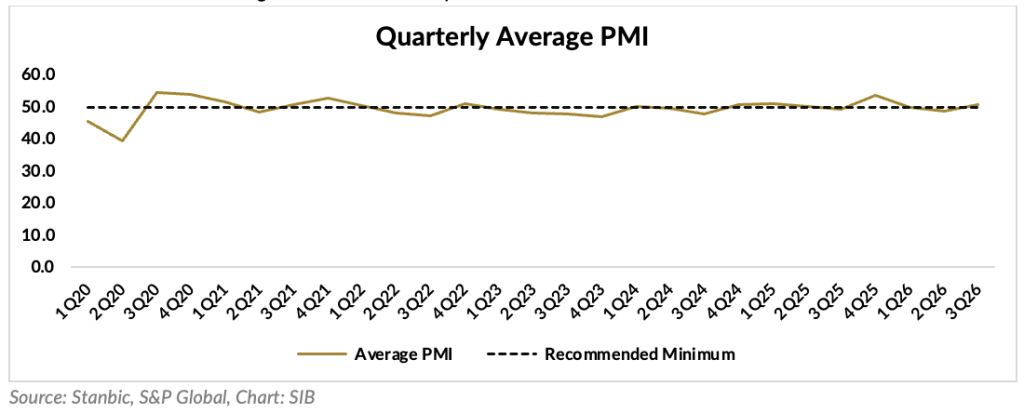
Kenya’s private-sector activity showed tentative signs of recovery in September, with the Stanbic Bank Kenya PMI rising to 51.3 from 49.7 in August, moving back above the 50.0 threshold and signalling a modest improvement in business conditions. The rebound was primarily demand-led, with new orders recording a fourth consecutive monthly increase, supported by stronger customer demand, improved cash flows, customer referrals and marketing activity. However, the improvement in headline sentiment has yet to translate into a broad-based recovery in output, which contracted for a seventh consecutive month, albeit at the softest pace in the current downturn.
See the chart below illustrating PMI trends over the years:
Cost Pressures Intensify, Selling Prices Accelerate: inflationary pressures across Kenyan businesses strengthened in September, with around 30% of firms reporting higher input costs, compared with just 1% reporting a decline. Higher fuel, transport and agricultural prices pushed up overall cost burdens, while businesses raised selling prices sharply to protect margins. Output price inflation accelerated to its second-fastest pace since November 2023, surpassed only by the rate recorded in June 2026, signalling a growing pass-through of elevated operating costs to consumers.
Purchasing Activity and Inventories Rebound: Firms increased purchasing activity for the first time in four months, albeit marginally, alongside a renewed build-up in input inventories. Supplier delivery times also improved for a second consecutive month, although only slightly, as material shortages continued to constrain supply chains. The improvement in purchasing and inventory accumulation suggests that firms are preparing for sustained demand, even as supply-side constraints remain binding.
Hiring Holds Up Despite Weak Output: Employment continued to increase in September, while outstanding work rose for a fourth consecutive month, pointing to strengthening workloads and expectations of sustained demand. However, business confidence eased to a four-month low, highlighting continued caution around the durability of the recovery.
Overall, the September reading points to improving demand momentum but increasingly binding supply and cost constraints, suggesting that the near-term outlook remains cautiously positive, but that a sustained recovery will depend on easing inflationary pressures and improved input availability.
The International Scene: Shilling Remains Unmoved Against the Dollar Amid Robust Reserves
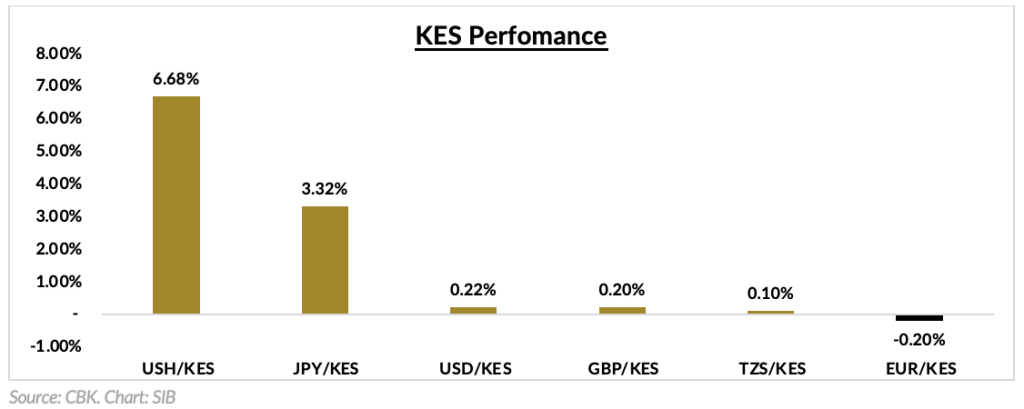
The Kenyan shilling was broadly stable against major currencies during the quarter, with USD/KES appreciating by 0.22% q/q and GBP/KES by 0.20%, while EUR/KES declined by 0.20%. The shilling recorded a stronger move against the USDH/KES at 6.68% and JPY/KES at 3.32%, while TZS/KES increased marginally by 0.10%. Overall, the relatively limited movements against major global currencies point to continued exchange-rate stability.
See the chart below for illustration:
For nearly a year, the USD/KES exchange rate has remained anchored around the resistance level of 128–129. This sustained stability is largely attributed to reduced dollar demand and a strong foreign exchange reserves position, which affords the Central Bank the flexibility to intervene in the market when necessary.
See the illustration below;
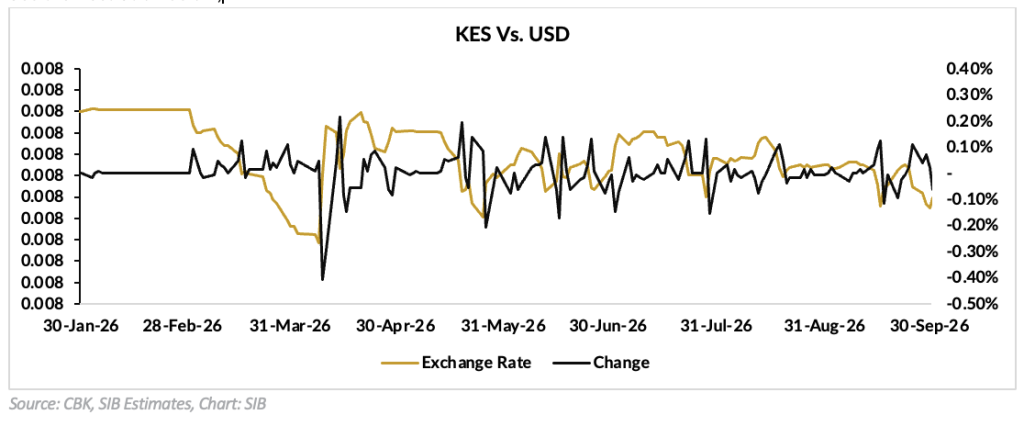
Exchange rate stability remains at risk from a widening current account deficit and potential disruptions to diaspora remittance inflows, largely linked to ongoing geopolitical tensions. The performance of the Kenya shilling continues to depend on external trade dynamics, remittance inflows, and external debt management operations.
Overall, exchange rate stability remains vulnerable to external shocks, including geopolitical tensions, energy price fluctuations, and trade disruptions, which are likely to heighten volatility and sustain depreciation pressures in the near term.
Kenya’s foreign exchange reserves have risen to USD 15.04bn (c. 6 months of import cover) as of September 2026, providing a robust external buffer as the economy faces rising risks from elevated global oil prices and escalating Middle East tensions. This figure marks a 14% from the levels recorded at the end of the second quarter in June 2026.
The reserve position comfortably exceeds both the CBK’s statutory requirement of 4 months and the East African Community’s convergence criteria of 4.5-months. Additional external financing is likely to improve this position in coming months.
See the chart below;
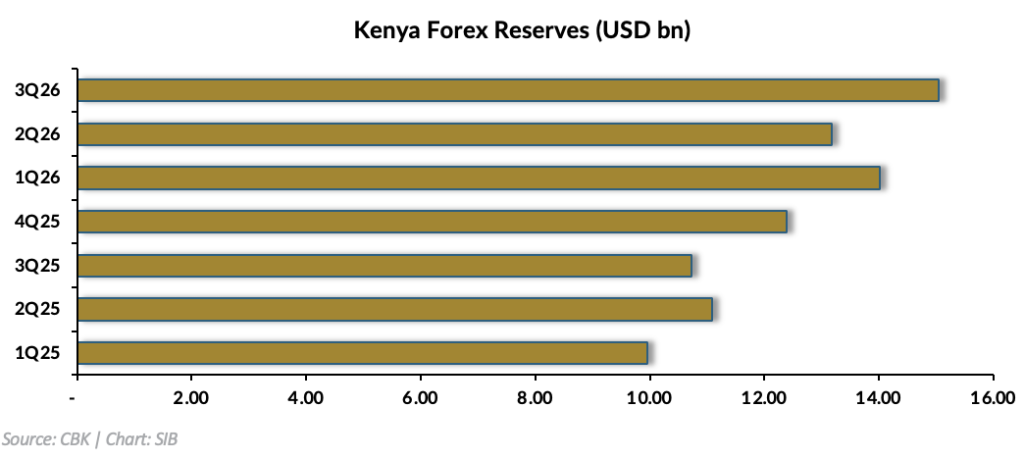
The improved reserve position comes at a critical time, as elevated global oil prices and escalating Middle East tensions pose downside risks to Kenya’s external balance. As a net oil importer, sustained price pressures could widen the current account deficit and introduce renewed FX pressures.
Nonetheless, the current buffer should help anchor currency stability in the near term. However, given that the reserve accumulation is partly driven by non-recurring inflows, underlying external vulnerabilities remain, particularly in the face of tightening global financial conditions.
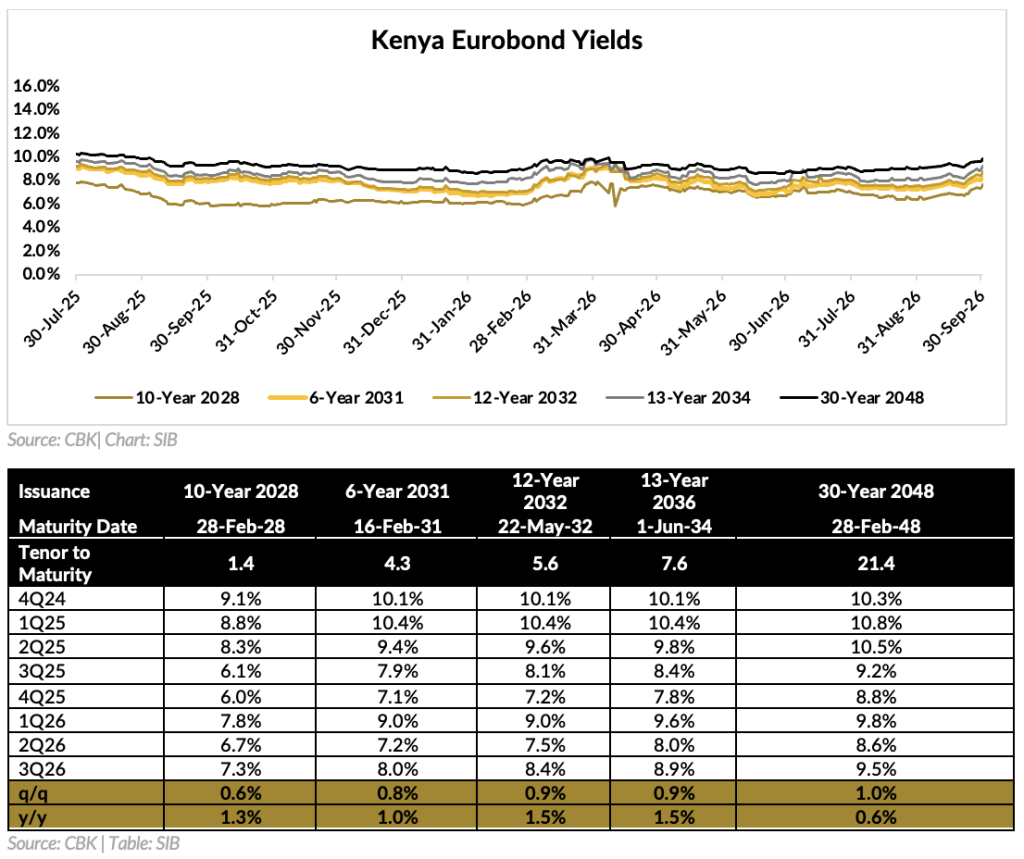
Kenyan Eurobond yields rose across all maturities in 3Q26, reversing the decline recorded in 2Q26. Yields increased by 0.6–1.0% q/q, with the increase becoming more pronounced at the longer end of the curve. The 2048 bond recorded the largest rise of 1.0% q/q to 9.5%, while the 2028 bond increased by 0.6% to 7.3%. The broad-based repricing reflects higher investor risk premiums and renewed upward pressure on external borrowing costs, particularly for longer-dated sovereign debt, amid a more cautious global market environment.
Kenyan Eurobond yields are likely to remain elevated in the near term, with the longer end of the curve particularly sensitive to movements in global benchmark yields, oil prices and investor risk appetite. While improved domestic macroeconomic stability and progress on fiscal consolidation could support renewed yield compression, persistent inflationary pressures, elevated external financing needs and global rate uncertainty are likely to limit the pace of any decline. The planned external borrowing will also remain an important market test, with pricing expected to depend on prevailing global conditions and investor confidence in Kenya’s fiscal trajectory.
The cumulative diaspora remittances for the first two months of 3Q26 increased by 14% to USD 888 Bn from
KES 792 Bnrecorded in the first two months of 1Q26.
Kenya’s diaspora remittances rose to a record US$451.85 million in August 2026, up 3.5% m/m and 6.0% y/y, surpassing the previous high of US$450.29 million recorded in March. However, the record monthly inflow masks a continued shift in the composition of remittance sources, with US inflows falling 15.4% y/y to US$205.22 million and their share declining to 45.4%
The weakness from the US has been increasingly offset by stronger inflows from Europe, Africa and other markets, with European receipts rising 23.7% y/y and inflows from markets outside North America and Europe increasing 42.5%
Overall, remittance inflows remain a key pillar supporting Kenya’s external position, helping to cushion the current account and support FX reserve accumulation.
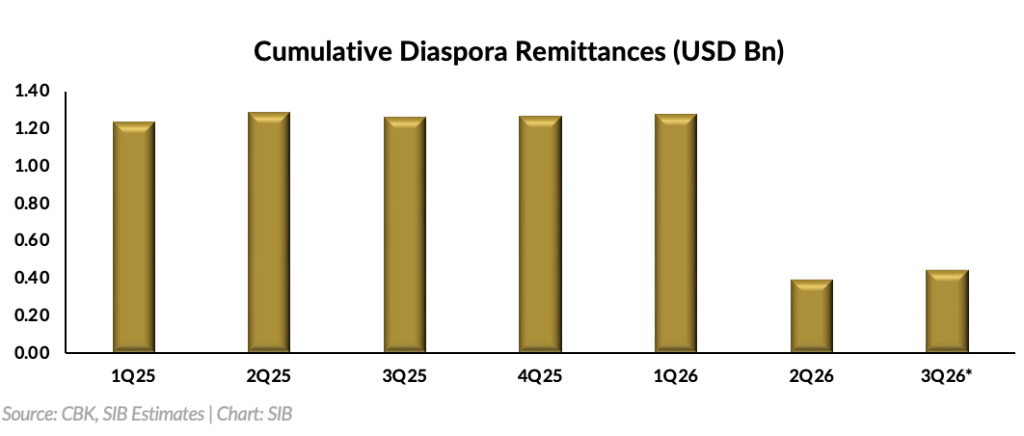
Diaspora remittances to Kenya are expected to remain resilient in 2026, with the Central Bank of Kenya projecting ~4% growth to USD 5.24bn, supported by a recovery in inflows from the Middle East—particularly Saudi Arabia—following prior disruptions linked to Labor policy changes. Monthly inflows are likely to remain stable in the USD 400–420mn range, anchored by strong contributions from North America. Remittances will continue to play a critical role in supporting FX reserves and shilling stability, although risks remain tilted to the downside from potential global growth moderation and tightening external financial conditions.
Looking ahead, diaspora remittances—particularly from key sources such as the UAE and Saudi Arabia—face potential headwinds amid ongoing disruptions in the Middle East. Similarly, tea exports to Gulf markets could be adversely affected if the conflict persists, posing risks to export revenues.