This fiscal update provides an in-depth look at Kenya’s financial position at the close of the third quarter (Q3) of the 2025/2026 fiscal year. The data reveals a government balancing significant debt obligations against a resilient, though slightly under-target, revenue performance.
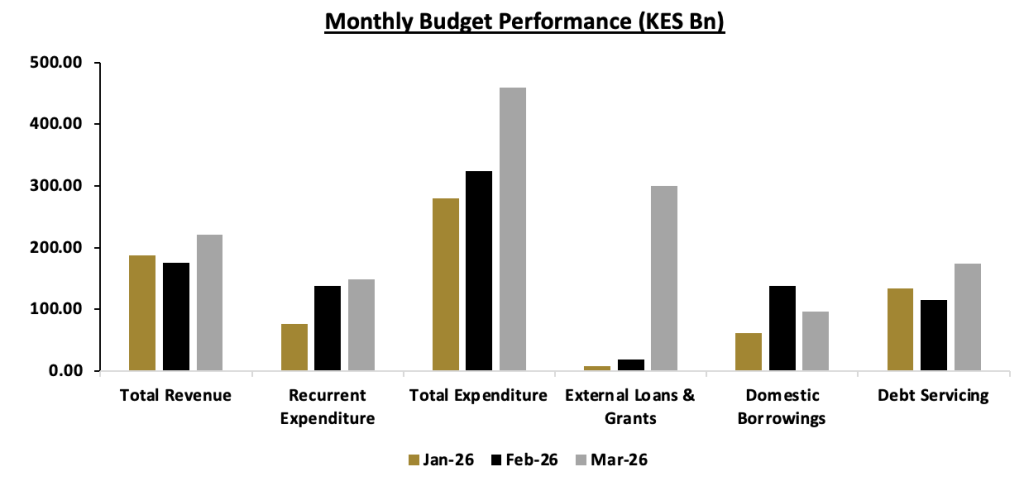
The FY 2025/26 period represents Kenya’s first post-pandemic fiscal year without an active IMF program, essentially internalizing the country’s financing requirements. This shift is highlighted in the first supplementary budget, which projects that 71% of total funding will now be sourced from domestic borrowing.
Source: Kenya Gazette, Chart: SIB
Revenue Performance & Receipts
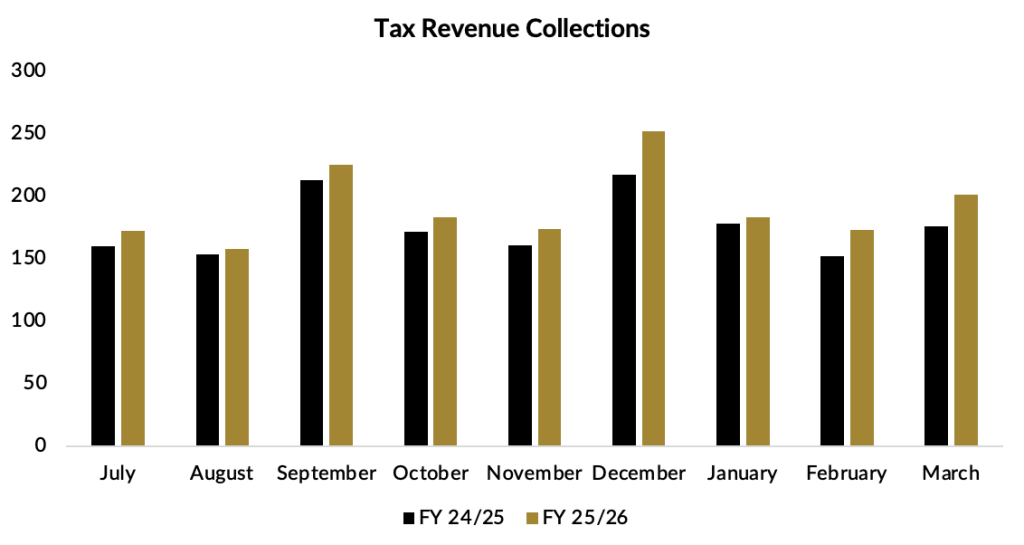
Total receipts reached a record KES 3.4Tr by the end of the third quarter. While tax collections have seen a moderate improvement, the record figure is heavily supported by aggressive domestic borrowing and a focus on digital tax integration.
The standout headline is the Kenya Revenue Authority (KRA) crossing the KES 2.0Tr mark.
- Cumulative Collections: KRA reported cumulative revenue of KES 2Tr as of March 31, 2026. This represents an 11.4% y/y growth, though it remains roughly KES 84Bn (4%) below the ambitious internal target of KES 2.3Tr putting the tax collector under pressure to bridge the shortfall in the final quarter amid global economic uncertainties and moderating import demand.
- The “Surprise” Outturn: The April 7th announcement highlighted that while consumer demand remains cautious, digital initiatives like eTIMS and improved compliance in domestic taxes (KES 1Tr) and Customs (KES 734Bn) have kept the exchequer afloat.
Source: Kenya Gazette, Chart: SIB