In today’s evolving investment landscape, Kenyans are increasingly exploring investment opportunities that not only offer the potential for financial growth but also align with their personal values and ethical principles.
Whether you are an entrepreneur looking to expand your business, an investor seeking new opportunities, or simply interested in growing your wealth responsibly, understanding how your money is invested is an important first step.
This is where Islamic finance comes in.
Rooted in principles of fairness, transparency, ethical conduct and shared responsibility, Islamic finance offers an alternative approach to conventional interest-based financing. Rather than relying on predetermined interest payments, certain Islamic investment structures encourage partnerships where financial returns are linked to the performance of an underlying business or investment.
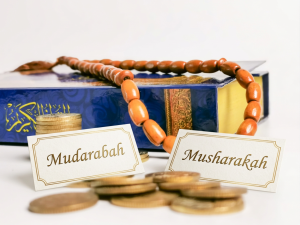
Two key structures that demonstrate this approach are Mudarabah and Musharakah.
But what exactly do they mean, how do they work, and what opportunities do they present for Kenyan investors?
Let’s take a closer look.
1. Mudarabah: Investing Through Expertise
Imagine you have capital to invest but may not have the time, expertise or resources to manage a business. At the same time, there is an entrepreneur with a promising business idea and the experience to bring it to life, but they need financial support.
Mudarabah provides a way for these two parties to work together.
Mudarabah is an investment partnership in which one party provides the capital (the investor), while the other contributes their expertise, skills and management capabilities (the entrepreneur).
For example, an investor in Kenya may provide capital to support the expansion of a retail business, agricultural enterprise or manufacturing venture. The entrepreneur then manages the day-to-day operations, using their knowledge and experience to grow the business.
Any profits generated are shared between the two parties according to a ratio agreed upon before the investment begins.
However, what happens if the business makes a loss?
Under a genuine Mudarabah arrangement, the investor bears the financial loss, while the entrepreneur loses the time and effort invested in managing the business. This applies provided the loss did not result from the entrepreneur’s negligence, misconduct or breach of the agreed terms.
Why does this matter to Kenyan investors?
Mudarabah creates an opportunity for individuals with available capital to participate in productive business ventures without necessarily having to manage daily operations. It also provides entrepreneurs with access to funding and an opportunity to grow viable businesses by leveraging their expertise.
Ultimately, it brings together two important ingredients for business success: capital and knowledge.
2. Musharakah: Building Wealth Through Partnership
What if you want to invest in a business and also contribute financially alongside other partners?
This is where Musharakah comes in.
Musharakah is a partnership arrangement in which two or more parties contribute capital towards a shared business venture. Each partner has a financial stake in the investment, with profits and losses shared according to agreed Shariah-compliant principles.
For instance, an investment firm and a business partner could jointly finance a property development project in Nairobi, support the expansion of a commercial enterprise, or invest in an agricultural venture.
Each party contributes an agreed amount of capital, and the partnership operates based on mutually agreed terms.
Profits are distributed according to a pre-agreed ratio, while financial losses are shared in proportion to each partner’s capital contribution.
Why does this matter to Kenyan investors?
Musharakah offers an opportunity to participate in larger investment ventures by pooling financial resources, expertise and business networks.
Rather than shouldering the entire financial commitment alone, investors can collaborate with other partners to pursue viable opportunities. This approach can support business expansion, property development and other productive economic activities.
It also reinforces an important principle: successful investment partnerships are built on mutual trust, shared objectives and clearly defined responsibilities.
3. Why Is Risk-Sharing Important in Islamic Finance?
One of the defining features of Islamic finance is its emphasis on linking financial returns to genuine economic activity.
Unlike conventional interest-based lending, where interest is generally payable regardless of the underlying business performance, Mudarabah and Musharakah are structured around investment partnerships in which returns depend on the performance of the venture and the agreed contractual terms.
For Kenyan investors, this approach offers several important considerations:
Ethical Wealth Creation
Islamic finance encourages investment in Shariah-compliant activities and businesses that meet established ethical requirements. This allows investors to pursue financial objectives while remaining guided by their values.
Transparency and Accountability
Investment terms, responsibilities, profit-sharing ratios and potential risks are agreed upon before the partnership begins. This encourages openness and helps all parties understand their obligations.
Supporting Business Growth
By connecting investors with entrepreneurs and viable business opportunities, risk-sharing structures can help channel capital into productive sectors of the economy, including agriculture, trade, real estate and manufacturing.
Shared Responsibility
Both Mudarabah and Musharakah promote a partnership-based approach to investment. Each party understands its role and participates in the financial outcomes according to the structure of the agreement.
Ultimately, risk-sharing is about creating a more collaborative investment relationship, where financial success is connected to real business performance.
4. What Should You Consider Before Making an Islamic Investment?
While Mudarabah and Musharakah present interesting opportunities for investors, it is important to remember that no investment is entirely risk-free.
Before committing your money, take time to understand the investment opportunity and the people behind it.
Here are a few important considerations:
- Understand the business: Find out what the investment involves, how it generates revenue and whether the underlying business model is viable.
- Evaluate the management team: Consider the experience, track record and capabilities of the people responsible for managing the investment.
- Understand the profit-sharing arrangement: Be clear about how profits will be calculated and distributed, as well as how financial losses will be handled.
- Know your investment horizon: Consider how long your capital will be committed and whether this aligns with your financial goals.
- Verify Shariah compliance: Ensure that the investment structure and underlying business activities meet the applicable Shariah requirements.
- Understand the risks: Ask questions about potential challenges, exit arrangements and the circumstances under which you could lose some or all of your invested capital.
Being an informed investor means looking beyond the expected returns and understanding the entire investment arrangement.
Investing with Purpose, Growing Through Partnership
As Kenya’s financial landscape continues to evolve, Islamic finance presents an opportunity to explore investment approaches that bring together financial growth, ethical principles and shared responsibility.
Mudarabah and Musharakah demonstrate that investing does not always have to be about lending money and earning interest. It can also be about building partnerships, supporting businesses and creating value through shared opportunities.
At SIB Najah, we recognise the importance of investment solutions that align financial aspirations with ethical and Shariah-compliant principles.
We believe that informed investment decisions begin with understanding the opportunities available, the structures behind them and the principles that guide them.
Whether you are an entrepreneur seeking investment, an individual exploring ethical wealth creation, or simply looking to understand Islamic finance better, learning about these investment structures is a valuable step towards making more informed financial decisions.
At SIB Najah, we believe in investing with purpose, building through partnership and creating opportunities for sustainable growth.